Friday, October 1, 2010

Technological Trap

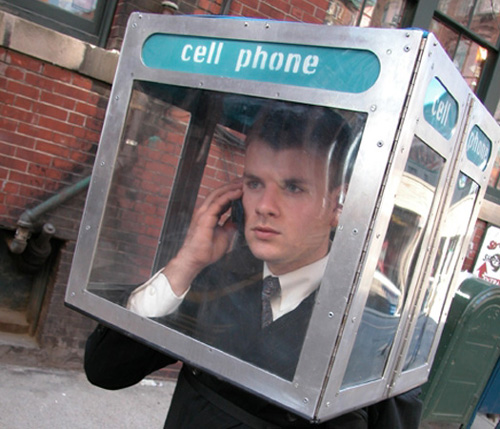
Email, text messaging, Facebooking, Tweeting, web surfing, and oh yeah- Talking. These are all features that are accessible via cellular phones. For almost four decades society has been evolving the technology on how we can communicate on the go. It started with a "brick like" phone to a pocket computer. But have we as a society become too reliant on mobility? Are we becoming less personable with those around us? Cell Phones were created to make us free from boundaries, but has it turned us into technological prisoners? 

Cellular Breakdown

Dr. Martin Cooper
Cellular telephone: a hand-held mobile radiotelephone for use in an area divided into small sections, each with its own short-range transmitter/receiver.

887357, the patent number for a wireless telephone, issued 1908 to Nathan B. Stubblefield of Murray, Kentucky. In 1979 Japan launched the first ever commercial cellular network. The first cell phone, as we know it, was created in 1973 by Dr. Martin Cooper. The phone was called the "Motorola Dyna-Tac" that weighed 2.5 pounds. The talk time was approximately 35 minutes while the recharge would take the user 10 hours! The features included were top of the line. The consumer could talk, listen, and DIAL!

Statistics


Now only thirty-seven years after being introduced into our society, our world has significantly changed. In the US alone, 223 million people over the age of 13 are part of the cellular age. Of the 223 million who use mobile phones, 60.7 million participate in mobile web surfing. 18% of the phones sold to consumers fill the smartphone category (mobile phone offering advanced capabilities, often with PC-like functionality). On the lower end, only 8% of the mobile users have used the mp3 audio streaming capabilities. An even lower percentage (7%) use their devices to stream different types of video to their mobile device.

Goodbye Past, Hello Future!

Since the Jetsons, we have been promised flying cars, jet-packs, and robotic house maids. However, scientists have yet to deliver these gadgets to us. But what is in store for the future of communication? Is email, web browsing, and video chatting as far as we will go? Companies are promising more, but will they live up to the hype?